
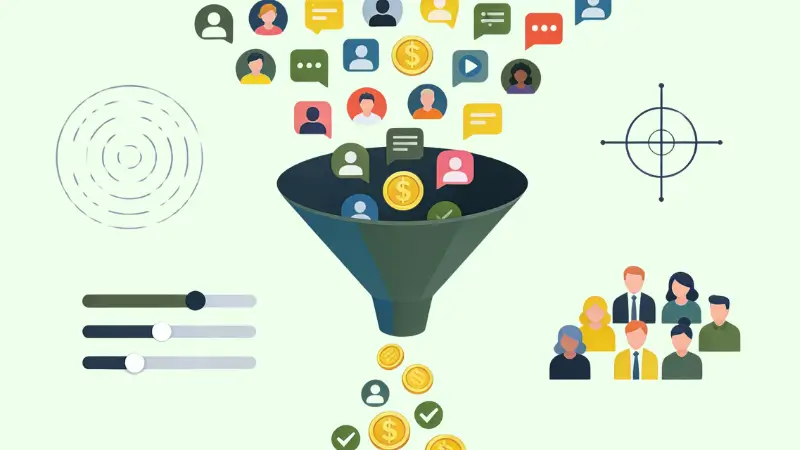
Reducing cost per lead (CPL) with social media ads is less about slashing budgets and more about using smarter, data-driven targeting that focuses every rupee or dollar on people most likely to convert.
When brands combine precise audience segmentation, retargeting, and lookalike audiences with strong creative and landing-page alignment, they often see 30–60% lower CPL without sacrificing lead quality.
This comprehensive guide reveals proven strategies that leverage smart targeting to significantly reduce your cost per lead while maintaining or even improving lead quality.
What Is Cost Per Lead (CPL)?
CPL is the total amount spent on a campaign divided by the number of leads generated, and it indicates how efficiently your social media ads are turning ad spend into contactable prospects.
In 2025, paid social media leads average around $65 each across platforms, but costs vary widely by industry and channel.
For example, Facebook often delivers leads in the $5.83–$21.98 range, while LinkedIn can reach $15–$350 per lead for highly targeted B2B audiences.
You can also read: Why Facebook Is Still a Powerful Platform for Small Businesses in 2026.
Why Does Smart Targeting Reduce Cost Per Lead?
Social media ads tend to deliver cheaper CPLs than many paid search campaigns because they allow extremely granular demographic, interest, and behavioral targeting.
Platforms like Facebook and Instagram let you narrow audiences so that fewer impressions are wasted on people unlikely to convert, which naturally drives down cost per lead.
Additionally, segmenting and prioritizing high-intent users enables you to bid more aggressively where it truly matters while trimming spend on low-value segments.
So, here are some practical tips that can help you reduce cost per lead.
You can also read: 7 Social Media Marketing Trends Every Business Should Know in 2026.
Step 1: Define and Segment Your Best-Fit Audiences
The first step in reducing CPL is knowing exactly who your highest-value leads are and structuring your targeting around them.
Use demographic data (age, gender, location), firmographic attributes (company size, industry, job title), and behavioral signals (website visits, content engagement, past purchases) to build tightly defined segments.
Moreover, brands that sharpen targeting using data-driven segmentation typically see less wasted spend, higher conversion rates, and lower CPL.
Useful segments to consider:
- Warm website visitors and landing-page viewers.
- Engaged social media users (video viewers, profile visitors, post engagers).
- Existing customers and high-intent leads.
- Lookalikes of your best customers.
Step 2: Use Retargeting to Capture Warm Intent
Retargeting campaigns focus on people who have already interacted with your brand, making them far more likely to convert than cold audiences.
Studies show that retargeting can deliver 3–5x lower CPL compared to standard acquisition campaigns, because you are advertising to users who already know and trust you.
On Facebook and Instagram, you can retarget users who visited your website, viewed specific pages, watched your videos, or engaged with your ads and posts.
Best practices for retargeting:
- Create separate ad sets for different intent levels (e.g., cart abandoners vs. general visitors).
- Shorten attribution windows and increase bids for the highest-intent segments.
- Use reminder-style ads with clear, urgency-driven CTAs rather than generic awareness creative.
You can also read: Why Every Business Needs Professional Social Media Management?
Step 3: Scale Efficiently with Lookalike Audiences
Lookalike audiences help you reach new people who resemble your existing high-quality leads or customers, expanding reach while maintaining efficiency.
By feeding platforms a seed audience of top customers or high-intent visitors, you allow algorithms to find similar users who are statistically more likely to convert, often at a lower CPL than broad interest-based targeting.
One study reported a 60% reduction in top-of-funnel CPL when using a 1% lookalike audience built from high-intent blog visitors, without increasing ad spend.
High-value lookalike seeds include:
- Recent purchasers or high-LTV customers.
- Qualified leads who booked calls or demos.
- Visitors to high-intent pages (pricing, case studies, lead magnets).
- People who completed micro-conversions, such as webinar registrations.
Step 4: Align Creatives and Offers with Each Audience
Even the best targeting will fail if the creative and offer do not match audience intent, which can quickly inflate CPL.
For cold or lookalike audiences, educational lead magnets such as ebooks, webinars, or discount offers typically outperform hard-sell ads, because they lower the barrier to engagement.
Also, for retargeted users who already know your brand, direct-response offers, free trials, demos, or booking calls, often produce higher conversion rates and lower CPL.
To optimize creatives for lower CPL:
- Use clear, benefit-driven headlines and strong visuals tailored to each segment.
- Highlight social proof such as testimonials or data points to reduce friction.
- Test different formats (carousel, video, lead forms) to see which converts more efficiently.
You can also read: 15 Powerful Video Content Ideas for Small Businesses.
Step 5: Optimize Landing Pages and On-Platform Lead Forms
Reducing CPL is not just an ads problem; landing-page experience plays a major role in how many clicks turn into leads.
Improving landing-page load time can help to improve conversions otherwise lost to abandonment, effectively lowering CPL without increasing ad spend.
Additionally, simplifying forms, clarifying messaging, and ensuring mobile responsiveness all contribute to higher conversion rates.
On Facebook and Instagram, native lead forms can also reduce CPL by minimizing friction because users submit details without leaving the platform.
However, it remains important to qualify leads within the form to maintain lead quality while keeping the number of fields as low as possible.
Step 6: Use Platform Pixels and Conversion APIs
Accurate tracking is essential for smart targeting and CPL reduction, because ad platforms depend on conversion data to optimize delivery.
Implementing tools such as the Facebook Pixel and Conversion API allows you to track actions across devices, recover lost data due to browser restrictions, and feed richer signals back into the algorithm.
In one implementation, using first-party data and server-side tracking alongside smart segmentation helped reduce CPL by 67% in retargeting campaigns.
Tracking benefits include:
- Better optimization toward high-intent behaviors.
- More stable performance despite privacy changes.
- Improved audience building for retargeting and lookalikes.
Step 7: Continuously Test, Measure, and Refine
Ongoing testing is one of the most reliable ways to reduce CPL over time, because performance often hinges on small but compounding improvements.
Running A/B tests on headlines, images, videos, CTAs, and audience definitions helps identify the combinations that deliver the lowest CPL and highest lead quality.
Some advertisers report CPL decreases alongside an increase in lead volume after implementing automated bid strategies and systematic testing.
Key metrics to monitor:
- CPL by audience, placement, and creativity.
- Conversion rate from click to lead.
- Lead-to-sale rate, to ensure cheap leads are still valuable.
- Frequency and fatigue indicators to avoid rising costs over time.
You can also read: 5 Social Media Matrices You Must Track in 2026.
Conclusion
Reducing cost per lead with social media ads is ultimately about precision, not just lower bids or smaller budgets.
When you define your ideal customer clearly, build granular audience segments, and use social media tools like retargeting and lookalike audiences strategically, every impression has a higher chance of turning into a qualified lead.
Additionally, by pairing smart targeting with relevant creatives, high-converting landing pages, and accurate tracking, you continuously teach the algorithm who your best leads are, and your CPL drops as a result.
Over time, this creates a compounding effect: your campaigns become more efficient, your lead quality improves, and your marketing budget stretches further without sacrificing results.
If handling all of this in-house feels overwhelming and needs a professional social media ads agency in Patna, contact us and accelerate your results.
With the right strategy, testing framework, and optimization process, your social media ads can shift from “just generating clicks” to consistently delivering affordable, high-quality leads that fuel predictable growth.