
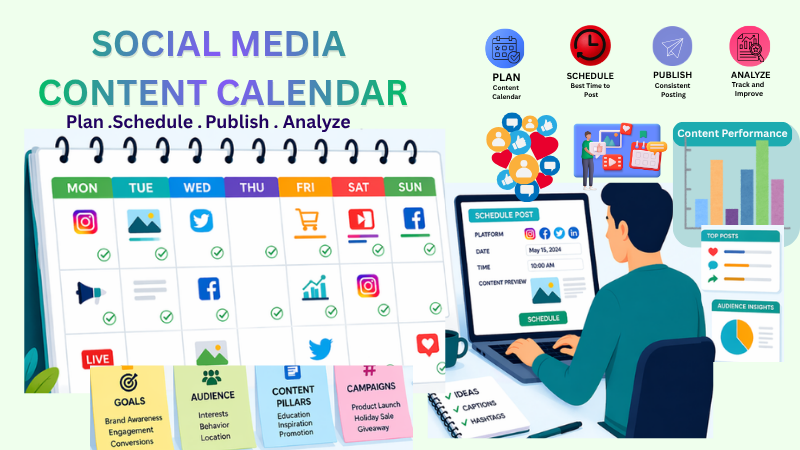
Most businesses don’t fail on social media because of lack of effort — they fail because of lack of direction. A clear 30 days content planning strategy can completely change how your brand shows up online, bringing consistency, clarity, and better results.
You might be posting regularly for a few days, then suddenly stop. Or you post only when you “feel like it.” This creates inconsistency, and inconsistency leads to low growth.
Now think about successful brands.
They don’t wake up every day wondering what to post. They follow a system — a structured content plan.
In fact, research shows that businesses that plan their content in advance are over 60% more consistent and see significantly higher engagement.
A 30-day content calendar is not just a planning tool — it’s a growth system.
It helps you stay consistent, save time, and most importantly, build a strong presence over time.
Table of Contents
- Introduction
- Why Most Businesses Struggle with Content
- What is a 30-Day Content Calendar
- Why It is Important for Business Growth
- Types of Content You Should Include
- Step-by-Step Process to Create a 30-Day Calendar
- Example Weekly Content Structure
- Tools You Can Use
- Signs You Need a Content Calendar
- Benefits of Proper Content Planning
- Common Mistakes to Avoid
- When You Might Need Expert Guidance
- Conclusion
- FAQs
Why Most Businesses Struggle with Content
Content creation looks simple from the outside, but in reality, it’s one of the biggest challenges for businesses.
Common issues include:
- Running out of content ideas after a few posts
- Posting without a clear goal
- Not understanding what the audience wants
- Lack of time to create content consistently
- Feeling confused about trends and formats
Because of this, many businesses either stop posting or continue without seeing results.
Without a plan, social media becomes reactive instead of strategic.
What is a 30-Day Content Calendar
A 30-day content calendar is a structured plan that outlines what you will post every day for a month.
It typically includes:
- Content type (reel, post, carousel, story)
- Topic or idea
- Caption direction
- Posting date
Instead of thinking daily, you plan everything in advance.
This shift from daily decision-making to planned execution makes a huge difference in consistency and quality.
Why It is Important for Business Growth
Consistency is the foundation of social media success.
When you post regularly with a clear strategy:
- Your audience starts recognizing your brand
- Engagement improves over time
- Algorithms favor your content
- Trust builds gradually
A content calendar also reduces mental pressure. Instead of worrying every day, you already know what’s coming next.
This allows you to focus more on quality and creativity.
You can Also Read This : How Businesses use Social Media for Marketing
Types of Content You Should Include
A strong content calendar is always balanced.
You should include different types of content to keep your audience engaged:
- Educational Content
Helps your audience learn something valuable and builds authority - Engagement Content
Encourages interaction through questions, opinions, or relatable posts - Promotional Content
Showcases your services or products in a subtle and value-driven way - Trending Content
Uses current trends to increase reach and visibility - Personal or Brand Content
Shows the human side of your business and builds connection
This mix ensures your content is not repetitive or boring.
Step-by-Step Process to Create a 30-Day Calendar
Creating a content calendar becomes easy when you follow a structured approach.
1. Define Your Goal
Start with clarity:
- Do you want more leads?
- Better engagement?
- Brand awareness?
Your goal decides your content direction.
2. Understand Your Audience
Ask yourself:
- Who is your target audience?
- What problems do they face?
- What type of content do they engage with?
The better you understand your audience, the more effective your content will be.
3. Choose Content Pillars
Content pillars are your main themes.
For example:
- Education
- Tips
- Promotions
- Trends
Stick to 3–5 pillars to maintain focus.
4. Plan a Weekly Structure
Instead of planning randomly, create a pattern:
- Monday – Educational
- Tuesday – Reel
- Wednesday – Engagement
- Thursday – Tips
- Friday – Promotional
- Saturday – Trend
- Sunday – Personal
This makes planning simple and repeatable.
5. Generate Content Ideas
Now list at least 30 ideas.
For example:
- “Common mistakes businesses make on social media”
- “Behind the scenes of your work”
- “Customer success story”
Having ideas ready removes daily confusion.
6. Create Content in Batches
Instead of creating daily:
- Shoot multiple videos in one day
- Design multiple posts together
- Write captions in one go
This improves efficiency and saves time.
7. Schedule Your Content
Use scheduling tools to post automatically.
This ensures consistency even when you are busy.
You can Also Read This: 5 Big Reasons why you need a Social Media content Calendar
Example Weekly Content Structure
A simple structure you can follow:
- 3 Reels (for reach and visibility)
- 2 Educational Posts (for value and authority)
- 1 Promotional Post (for conversion)
- Daily Stories (for engagement)
This balance helps you grow while also generating results.
Tools You Can Use
To make your workflow easier:
- Google Sheets or Notion for planning
- Canva for designing posts
- Scheduling tools for automation
- AI tools for generating ideas and captions
These tools help you stay organized and consistent.
Signs You Need a Content Calendar
You likely need a content calendar if:
- You don’t know what to post regularly
- Your posting is inconsistent
- You feel stressed about content creation
- Engagement is low
- Growth is slow
These signs indicate a lack of planning.
Benefits of Proper Content Planning
When you plan your content properly, you experience:
- Better consistency
- Higher quality content
- Improved engagement
- More efficient use of time
- Clear direction for growth
Over time, this leads to stronger brand presence and better results.
Common Mistakes to Avoid
Avoid these common mistakes:
- Planning but not executing
- Posting only promotional content
- Ignoring trends and audience preferences
- Not reviewing performance
- Copying others without understanding strategy
Success comes from consistency and continuous improvement.
You can Also Read this : 10 Social Media Marketing Mistakes businesses make
When You Might Need Expert Guidance
While creating a content calendar is straightforward in theory, maintaining consistency and achieving results can be challenging in practice.
Many businesses struggle with:
- Turning ideas into high-performing content
- Staying consistent over long periods
- Understanding what actually drives engagement and leads
In such cases, working with an experienced team can help bring structure, clarity, and better execution.
Teams like TrendShout focus on combining planning, creativity, and data to help businesses move beyond just posting – and start growing.
Conclusion
Social media growth is not random – it is planned.
A 30-day content calendar gives you clarity, consistency, and control over your strategy.
If you want to build a strong presence, connect with your audience, and grow your business, planning your content is the first step.
FAQs
- How many posts should I create in 30 days?
Ideally 20–30 posts, including reels, static posts, and stories. - Can I reuse content ideas?
Yes, you can repurpose the same idea in different formats. - Do I need to post daily?
Not necessarily. Consistency matters more than frequency. 4–5 quality posts per week are effective
4. Is a content calendar useful for small businesses?
Yes, it helps maintain consistency and improves long-term growth.